|
IBM's Got a Different Idea for Quantum Supremacy
Published: 9-10-2026
CREDIT: IBM
Not too long ago, we wrote about how Microsoft’s Majorana quantum computing project was aiming to break through the current limits of the technology by drastically increasing the number of qubits (quantum bits) that are possible. This is, so far, the main way computer scientists conceive of quantum computing becoming something truly useful.
This is the main road to “quantum supremacy”, which is the point where a quantum computer can solve a problem that no classical computer could ever do.
But while Microsoft is advancing down that path in leaps and bounds, it seems that IBM has decided to take a detour. IBM is chasing something considerably harder: quantum computers that can perform useful calculations reliably enough that conventional computers can't practically reproduce the results.
IBM learned that more qubits aren't necessarily better
CREDIT: IBM
IBM’s been pretty open about its quantum computing work. In 2016, it actually put a quantum computer in the cloud, letting the public access this 5-qubit machine. This meant researchers and developers could experiment with real quantum hardware without the need to own the extremely expensive equipment necessary to maintain such a machine. Not to mention the special building you have to house it in.
Over the following years, IBM steadily increased the number of qubits in its processors. Its 127-qubit Eagle arrived in 2021, followed by the 433-qubit Osprey in 2022 and the enormous 1,121-qubit Condor in 2023.
Then something interesting happened: IBM stopped treating the number of physical qubits as the most important metric.
Its 133-qubit Heron processor was considerably smaller than Condor, but IBM designed Heron around improving the quality of those qubits and reducing errors. That is important because quantum computers are extraordinarily sensitive to errors. Adding thousands of unreliable qubits doesn't necessarily get you closer to a useful quantum computer.
Ironically. Microsoft’s Majorana efforts, with its huge number of qubits, is chasing the same problem. Those extra qubits are meant to offer redundancy and error correction, but IBM reckons it can do it another way.
That's why IBM's current roadmap focuses heavily on circuit depth, error correction and logical qubits, rather than simply adding physical qubits.
IBM's current quantum computers are about doing more with less
CREDIT: IBM
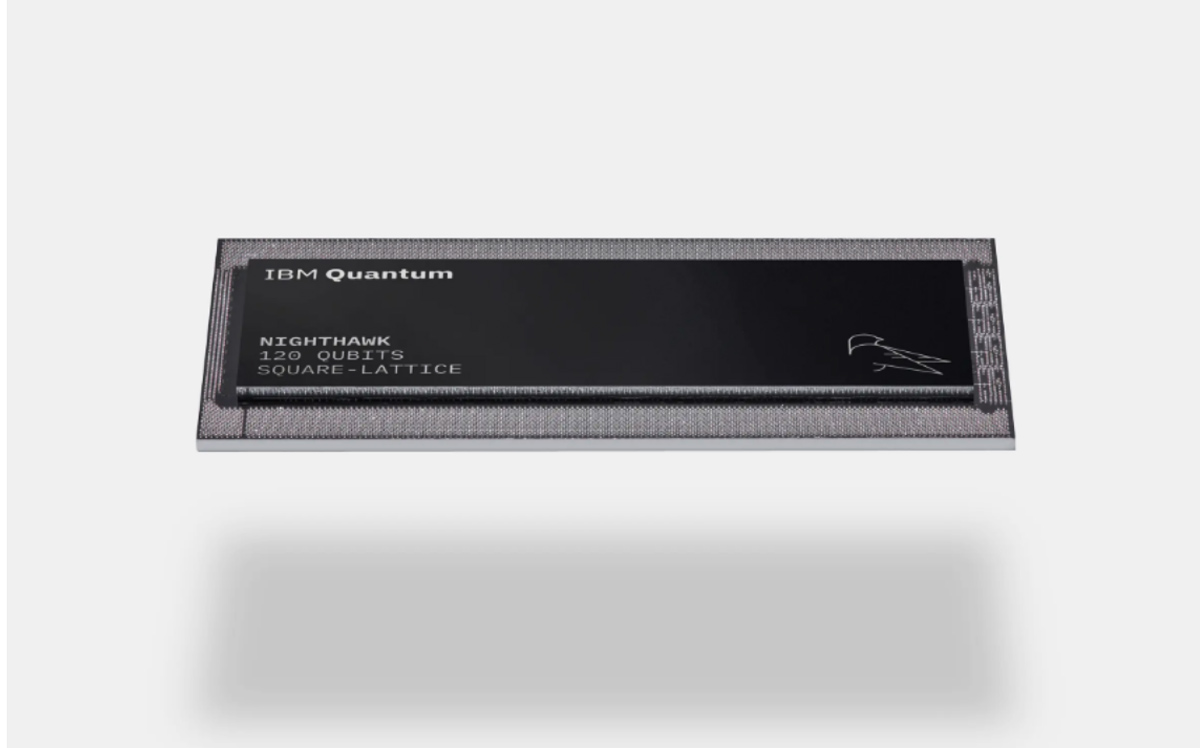
IBM's latest hardware strategy is represented by its Nighthawk processor.
Nighthawk has 120 qubits, which might sound unimpressive compared with Condor's 1,121. But its architecture is designed to provide more connections between qubits, allowing it to run more complicated quantum circuits without requiring as much overhead to move information around.
IBM expects Nighthawk to handle circuits containing up to 7,500 gates in 2026, increasing to 10,000 gates in 2027 and 15,000 in 2028. IBM also plans to connect multiple Nighthawk modules as it scales the system.
The goal isn't necessarily to build the quantum equivalent of a 10,000-core CPU. It's to build a machine capable of executing long, complicated quantum algorithms without errors overwhelming the calculation.
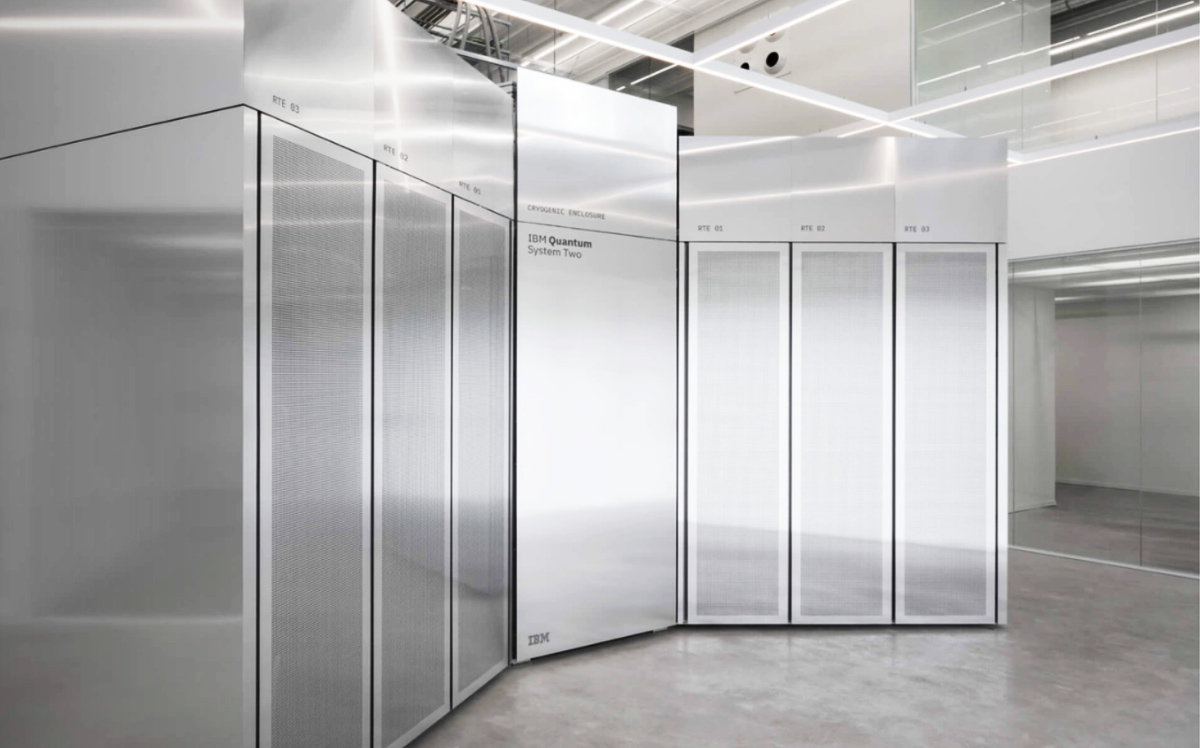
IBM is also working on an interesting approach with Quantum System Two, which combines classical computing and quantum computing to bring out the best in both.
So has IBM achieved quantum advantage?
This is such an interesting time in history, because while everyone else has an eye on AI technology, two giants like IBM and Microsoft have such different approaches to the same problem.
It almost feels like the early days of personal computing where it was still anyone’s game.
IBM says its partners are expected to demonstrate quantum advantage during 2026, while the company continues developing the hardware needed for genuinely fault-tolerant quantum computing. So we really don’t have to wait long before knowing who’s getting practical quantum computing out the door.
But the truly big milestone is still in the medium-term. The company's roadmap calls for IBM Quantum Starling, which IBM expects to deliver in 2029. This is supposed to be its first large-scale, fault-tolerant quantum computer, with 200 logical qubits capable of executing 100 million quantum operations.
If the data centers don’t end civilization before then, we might be in for something truly extraordinary.
Written by Sydney Butler.
|

