Threadripper vs. Xeon for AI: Which CPU Is Better?
Published: 6-23-2026
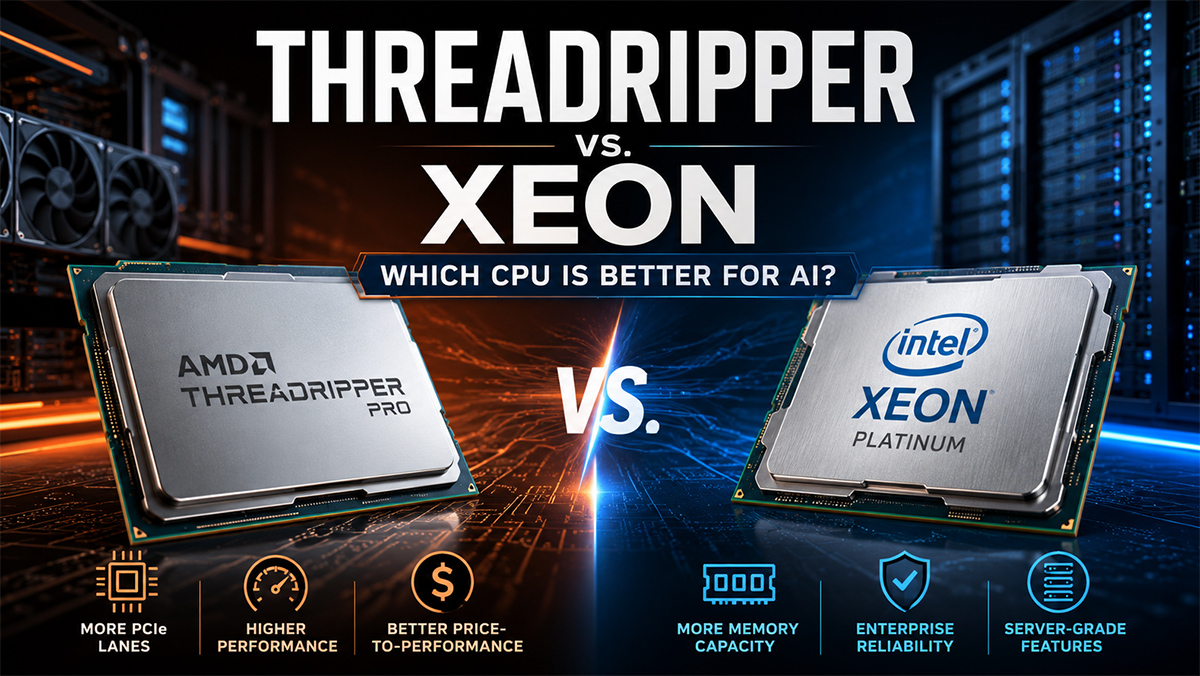
Image Credit: Generated by GPT
For most AI workstations, AMD Threadripper is the better choice because it offers more PCIe lanes, higher clock speeds, and better price-to-performance. Intel Xeon remains the better option for enterprise deployments that require maximum memory capacity, advanced RAS (Reliability, Availability, and Serviceability) features, and validated server platforms.
If You Are an AI hobbyist | Buy Threadripper
If You Are an AI developer | Buy Threadripper
Building a multi-GPU workstation | Buy Threadripper Pro
Running local LLMs | Buy Threadripper
Building a corporate AI server | Buy Xeon 6
Deploying mission-critical AI infrastructure | Buy Xeon 6
Why Threadripper is usually better for AI
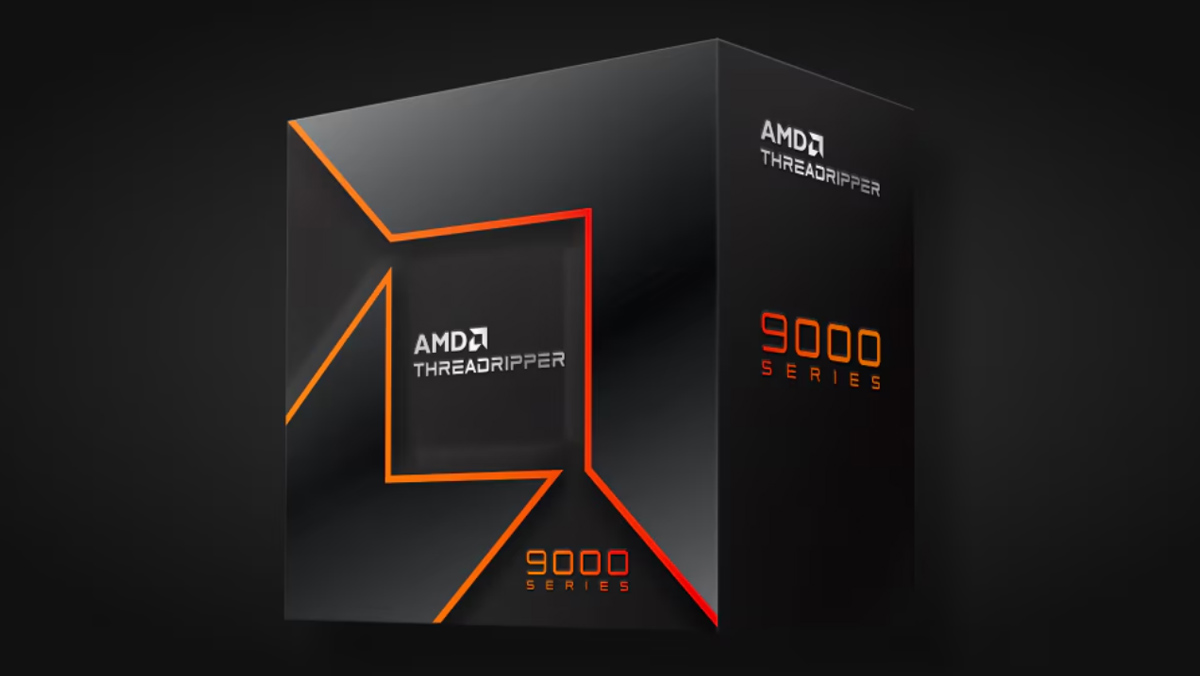
Image Credit: AMD
Your CPU plays a crucial role in any AI task, even if the entire model is in VRAM and running on the GPU, there’s still a need for data preprocessing, dataset loading, storage management, orchestration, and feeding data to the GPU.
Many models are now broken into smaller expert models that work together, and a fast overall system helps keep your token rates up when these models have to be loaded or unloaded from VRAM.
Threadripper excels because it combines:
- High core counts
- Strong single-threaded performance
- Massive PCIe lane counts
- Large memory capacity
- Huge RAM bandwidth potential
- Competitive pricing
Modern Threadripper Pro platforms, in particular, support multiple high-end GPUs without forcing users into expensive dual-socket server configurations. For AI developers running RTX 5090s or data-center GPUs, this flexibility is extremely attractive.
PCIe lanes matter more than core counts
A typical desktop processor may struggle to support more than one or two GPUs at full bandwidth. Especially if you have multiple high-speed SSDs that need to share PCIe lanes from the CPU’s main pool.
Threadripper Pro platforms can support multiple GPUs, high-speed NVMe storage arrays, and networking cards simultaneously. It offers PCIe lane counts that are simply unseen in any consumer CPU platforms.
Many AI builders focus on CPU specifications while overlooking the fact that GPU connectivity often becomes the real limitation. A processor with fewer cores but more PCIe lanes can boost your AI productivity and performance.
Where Xeon still wins
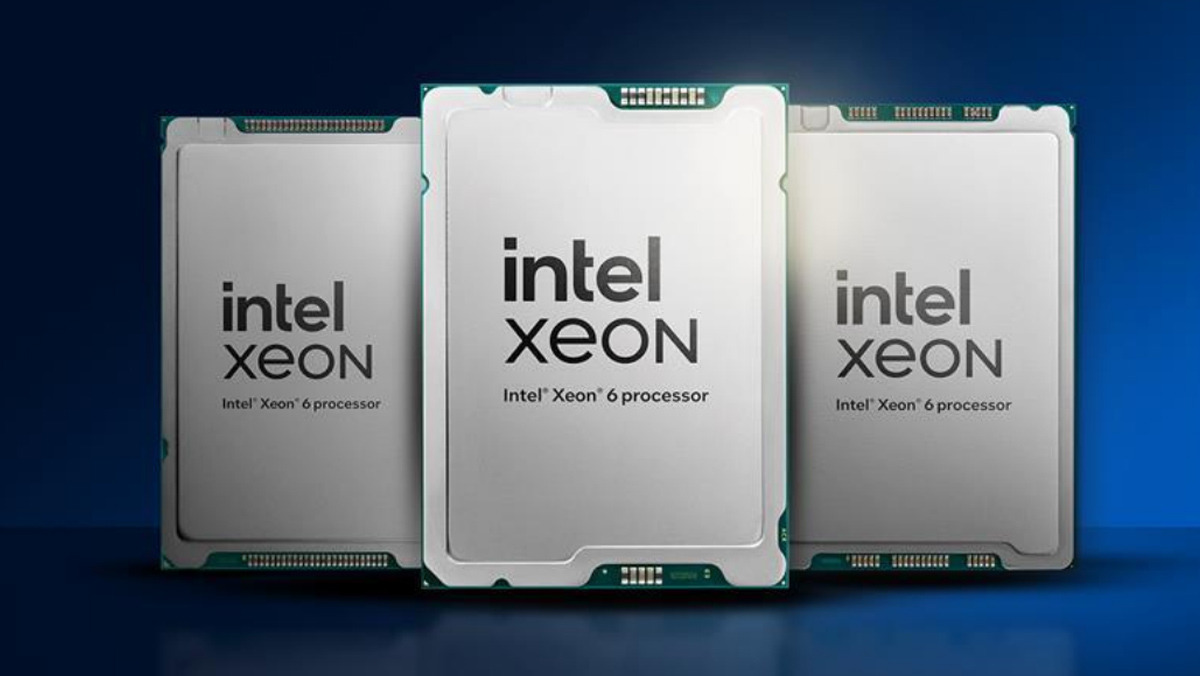
Image Credit: INTEL
We still think that, for AI, Threadripper Pro CPUs and NVIDIA RTX 5090 or Blackwell B200 GPUs offer the best overall performance and value, but Intel Xeon workstation CPUs still have a place here.
Enterprise Xeon platforms offer features that workstation users rarely need, including:
- Extremely large memory capacities
- Advanced reliability and error-correction features
- Long-term platform validation
- Enterprise management tools
- Certified server ecosystems
This doesn’t matter much when you’re a small-time developer with just one or two AI workstations, but when you’re looking to manage a small data center or greater, these Xeon features can be worth the switch.
Memory capacity can be the deciding factor
Certain AI workloads require enormous amounts of RAM for datasets, preprocessing, vector databases, or CPU-based inference. Enterprise Xeon systems can support several terabytes of memory, far beyond what most workstation platforms can accommodate.
If your workload requires hundreds of gigabytes or multiple terabytes of RAM, Xeon becomes much more attractive. Threadripper Pro is limited to 2TB of RAM, but higher-end Xeons can handle double that.
The bottom line...
For most AI workloads, Threadripper is the way to go.
It offers excellent performance, generous PCIe connectivity, strong memory support, and significantly better value than comparable Xeon systems. That's why Threadripper has become the preferred platform for many AI developers, machine learning researchers, and workstation builders.
Xeon remains the right choice for enterprise servers that require maximum reliability, enormous memory capacities, and long-term platform validation. But if you're building a local AI workstation, Threadripper is usually the smarter investment.
Written by Sydney Butler.
|

